How to Choose Custom Belt Buckles: Types, Materials & Design
Among fashion accessories, belt buckles are often one of the most overlooked yet essential components. Many people think of a belt buckle as simply the hardware that keeps a belt fastened, but in reality, it plays a key role in ease of use, overall style, durability, and even the first impression a product leaves.
A high-quality belt is not defined by the leather alone. The stability, smooth operation, wear resistance, and durability of the belt buckle are equally important. For brands, the buckle is an essential design detail that significantly enhances the overall quality and premium appearance of the product.
A Belt Buckle Is More Than a Fastener—It's a Design Feature
The primary function of a belt buckle is to securely fasten a belt at the desired position. However, in today's apparel and accessories market, belt buckles have evolved far beyond their functional role. They have become an important design element that influences a product's overall style and market positioning, whether it's a minimalist metal finish, vintage-inspired appearance, or sophisticated business look.
Belt buckles are widely used on men's belts, women's belts, work belts, outdoor utility belts, as well as certain bags and wearable accessories. Different buckle styles create distinctive aesthetics and help products stand out in the marketplace.
Common Types of Belt Buckles
Belt buckles are available in a wide variety of designs, each offering unique functions and advantages.
- Single-Loop Buckle:
A simple design where a metal loop secures the belt through its edge. It is economical, durable, and commonly used on workwear and sports belts. - Double Ring Buckle:
Consists of two metal rings that hold the belt in place through friction. Popular for outdoor gear and hiking belts thanks to its clean, functional design. - Pin Buckle:
Features a center prong that fits into adjustment holes on the belt. This classic and widely recognized design is suitable for most casual and formal belts. - Rotating Buckle:
The buckle head rotates for added functionality and a stylish appearance, making it popular among consumers who value distinctive design. - Automatic Ratchet Buckle:
Requires no belt holes. Instead, it uses a ratchet mechanism for precise adjustment and releases with the press of a button. It has become increasingly popular for work belts and outdoor products.
Common Materials Used for Belt Buckles
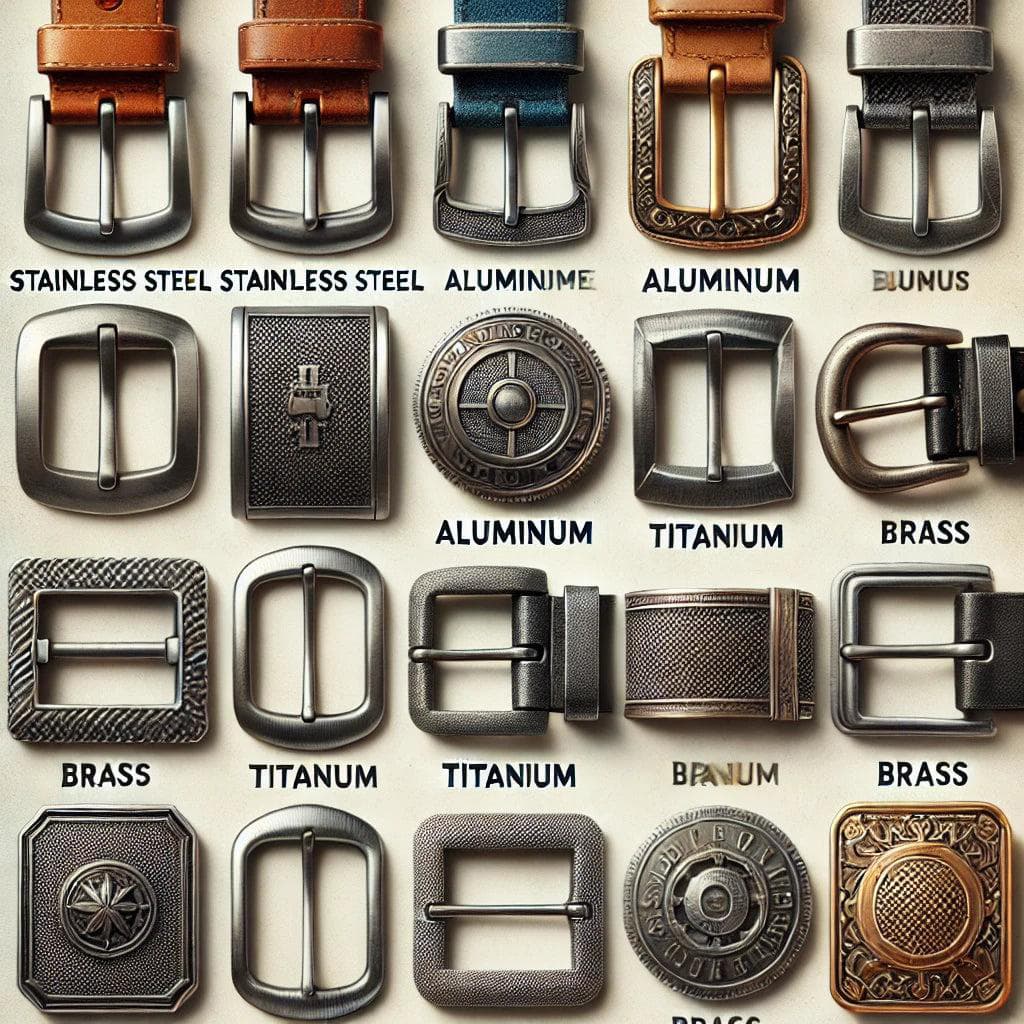
The choice of material is one of the most important considerations when developing a belt buckle. Common materials include zinc alloy, brass, and stainless steel, each offering different characteristics in terms of weight, strength, appearance, and corrosion resistance.
For everyday belts, many brands choose zinc alloy with electroplating to achieve an ideal balance between appearance and cost. If a more premium look or superior resistance to moisture and perspiration is required, stainless steel is often the preferred option. Brass remains a popular choice for vintage-inspired designs because of its distinctive color and natural aging characteristics.
Regardless of the material selected, the most important factor is long-term performance. A quality belt buckle should remain secure, resist deformation, and maintain its appearance after prolonged use.
What Should You Consider When Choosing a Belt Buckle?
Several important factors should be considered when selecting a belt buckle.
- Locking Mechanism:
A buckle with poor structural design may become loose or difficult to operate over time, negatively affecting the user experience. - Surface Finish:
Options such as polished, matte, antique brass, or black nickel influence not only the appearance but also scratch resistance and corrosion protection. In humid climates, high-quality surface treatment is especially important to prevent discoloration and rust. - Overall Design Compatibility:
A belt buckle should complement the belt's width, material, and color. Even a well-made buckle may fail to create the desired effect if it does not match the overall design.
For Brands, Belt Buckles Represent Craftsmanship and Quality
Today's consumers pay closer attention to product details, especially when purchasing fashion accessories. A memorable brand is rarely defined by offering the lowest price—it is often recognized for its craftsmanship and attention to detail.
Although a belt buckle may appear to be a small component, it directly affects usability, durability, and visual appeal. A well-designed, reliable buckle enhances the wearing experience and reflects the brand's commitment to quality. This is why many brands place significant emphasis on hardware selection, prototyping, and testing during product development.
Choose the Right Belt Buckle Supplier for Smoother Product Development
If you are a brand owner, trading company, distributor, or developing your own product line, working with a Taiwanese manufacturer experienced in custom belt buckle production can greatly simplify the entire development process. From tooling and prototyping to design revisions and mass production, every stage requires technical expertise and effective communication.
With nearly three decades of experience in manufacturing metal hardware in Taiwan, SINYI Metal specializes in producing belt buckles, rivets, eyelets, and various fastening components. We have extensive expertise in customized belt buckle solutions. A reliable supplier delivers more than products—they help transform your ideas into market-ready solutions. For brands that value consistent quality and dependable lead times, a trusted hardware manufacturing partner is an essential asset.
CONTACTUS
We strive to bring you quality products with a minimal approach of design.
DISCOVER MORE