Guide to Choosing Automotive & Motorcycle Rivets, Fastener and Custom Metal Components
It is a common misconception that hardware accessories in the automotive and motorcycle industries only need to be hard enough. In reality, before a vehicle part leaves the factory, it faces not only pull-out and shear force tests but also long-term vibration, temperature fluctuations, salt spray, and chemical corrosion. What truly determines a component's viability is whether materials, manufacturing processes, and certifications all meet the required standards simultaneously.
1. Rivets: Assess the Stress Type Before Choosing Solid or Hollow
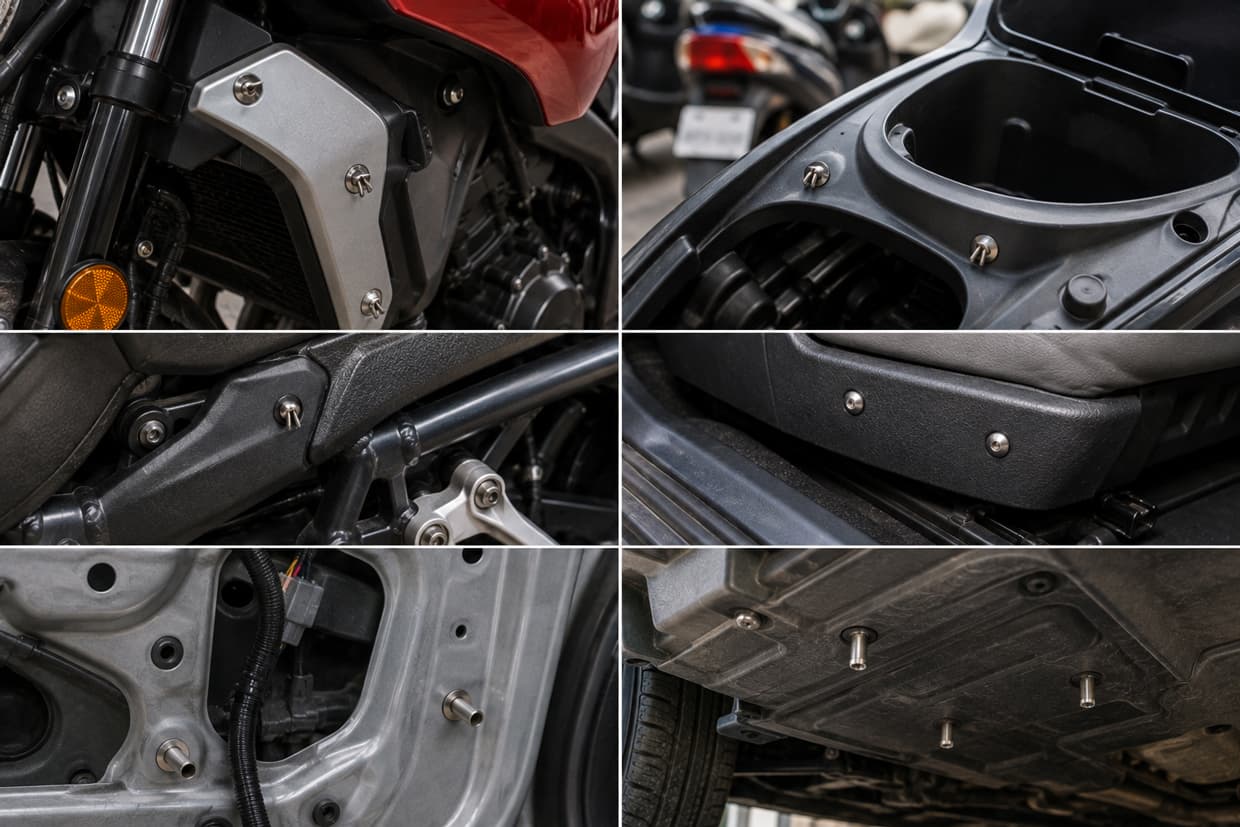
In body and interior structures, rivets are commonly used to secure sheet metal, brackets, and trim panels. Solid rivets offer higher shear strength, making them suitable for load-bearing positions on the main structure. Hollow or semi-tubular rivets, on the other hand, are used in assembly points that require weight reduction without facing high impact.
Beyond the type, the rivet's rod material, surface plating, and tolerance control directly affect whether there will be looseness or abnormal noises (BSR) after assembly. Automotive rivets typically require compliance with vehicle-grade anti-rust and weather-resistance standards. This must be confirmed during the procurement phase, rather than discovering issues during mass production.
2. Fasteners: Durability Lies in Repeated Disassembly and Vibration Resistance
For helmet buckles, interior clips, and sheet metal quick-release fasteners, the real challenge isn't the moment of installation. It is remaining stable after years of repeated use.
When evaluating fastener suppliers, we recommend focusing on three points:
- Does the material have sufficient elastic fatigue life?
- Will the opening/closing mechanism loosen due to wear and tear?
- Is the surface treatment resistant to sweat, salt spray, and UV rays?
Automotive fasteners often need to align with the vehicle's full lifecycle testing, making a supplier's capability to create custom molds much more valuable than merely offering off-the-shelf specifications.
3. Custom Metal Components: Molds, Materials, and Plating Done Right the First Time
When automakers or parts manufacturers need unconventionally shaped hardware, customization capability becomes the key to filtering suppliers. A complete customization process should include mold development, material selection, dimensional adjustment, surface plating, and functional modification.
The choice of plating is especially critical, as it simultaneously affects appearance, corrosion resistance, and electrical conductivity—which is highly important in electronic cabins and EV (Electric Vehicle) applications. Suppliers with vertical integration capabilities can shorten the communication time from prototyping to mass production and better ensure consistent quality.
4. When Selecting a Supplier, Certifications and Quality Control Matter More Than Initial Quotes
Automotive hardware is not a consumable purchase. It is highly recommended to prioritize whether the supplier complies with environmental regulations such as RoHS and REACH, and whether they can provide transparent QC reports and factory inspection processes. If the product comes into contact with the human body or enters the electronic control system, related material safety and reliability standards must also be confirmed.
Taiwanese suppliers generally hold an advantage in delivery flexibility, customization support, and high-mix low-volume production, making them ideal for early-stage prototyping and small-batch validation of automotive parts.
SINYI: Over 30 Years of Deep Expertise in Hardware Manufacturing
SINYI provides the following core values to customers in the automotive and motorcycle industries:
- Transparent Materials and Processes: We guarantee the use of authentic, high-quality steel and brass, never compromising on materials, to ensure consistent physical strength across every batch of automotive fasteners.
- International Quality Certifications: Our facility is ISO 9001:2015 certified for quality management systems and provides eco-friendly surface treatments compliant with RoHS and REACH standards, meeting the strict regulations of European and American automakers.
- Robust Prototyping and Mass Production Capabilities: From the moment we receive your CAD drawings, we offer professional DFM (Design for Manufacturability) advice to help optimize your mold structure, delivering samples and entering mass production in the shortest possible time.
Finalize Stress, Environment, and Regulations Before Selecting Parts
Whether it is a speeding heavy motorcycle or an SUV carrying the whole family, every rivet and fastener bears the heavy responsibility of safety. SINYI offers rivets, snap buttons, eyelets, buckles, and custom metal components. We assist in evaluating materials, dimensions, surface treatments, and mass production feasibility tailored to the needs of the automotive industry.
If you are looking for an automotive hardware supplier with custom mold capabilities and comprehensive quality control, please explore our customization process and certification information, or contact us directly to discuss your specific requirements.
CONTACTUS
We strive to bring you quality products with a minimal approach of design.
DISCOVER MORE